A tactile, motion-led interior-design portfolio combining spatial storytelling, sketchbook studies, editorial layouts, and responsive interaction design.
- Role
- Frontend Designer & Creative Developer
- Client
- Mariam Saad
- Year
- 2026
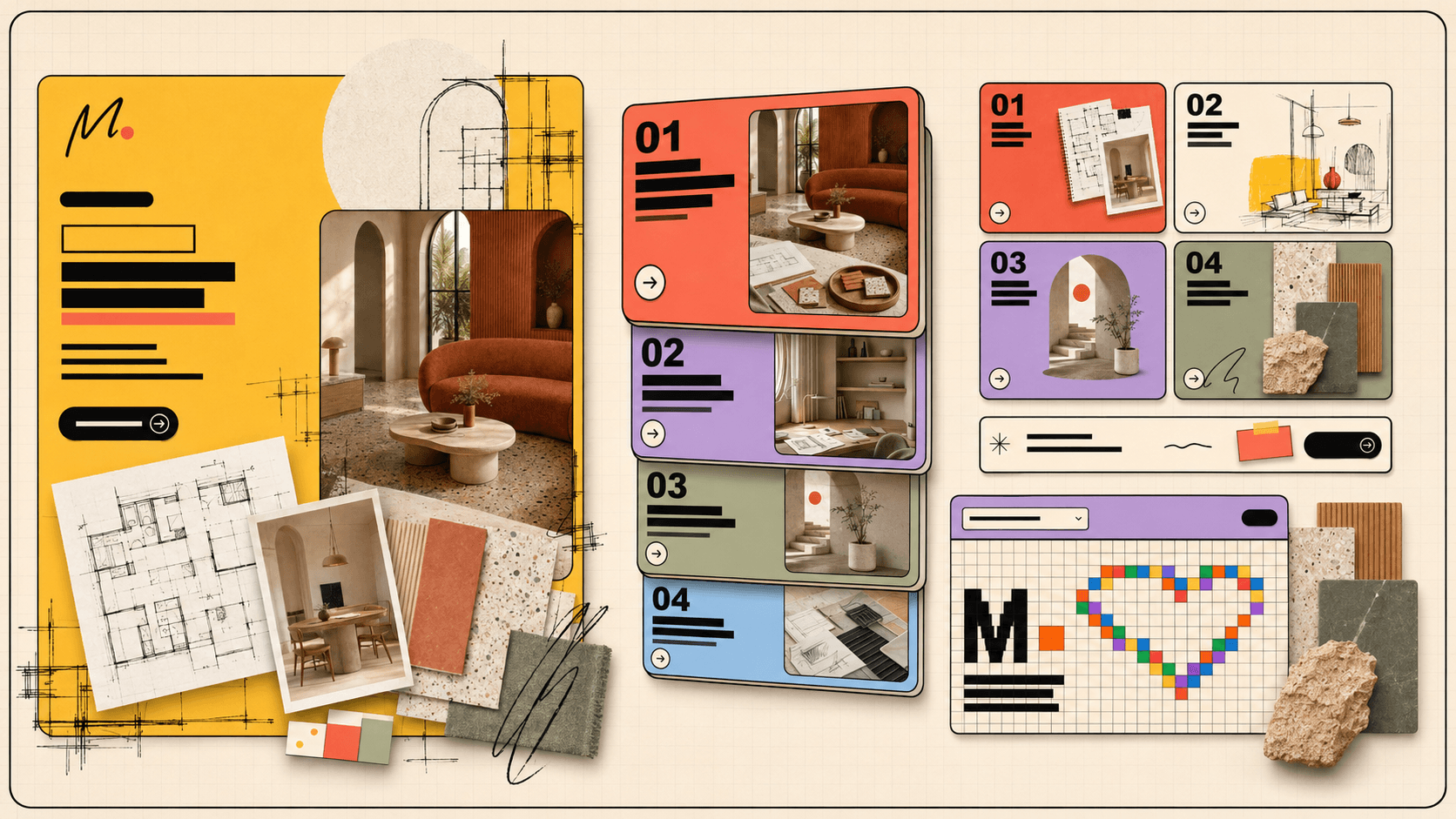
Mariam Saad’s portfolio is a purpose-built digital home for an emerging interior designer. Rather than placing work inside a conventional gallery template, the experience treats the website as an extension of her practice: tactile, editorial, material-aware, and structured around how ideas move from sketch to finished space.
The frontend brings selected projects, detailed project dossiers, sketchbook experiments, a five-phase design process, biography, and contact paths into one coherent visual system. A fixed desktop navigation rail, responsive mobile menu, full-screen layouts, custom route curtains, and page-specific motion give every section its own rhythm while maintaining a consistent identity.
This case study covers the completed frontend design and creative-development scope. The experience is built with Next.js and React, with GSAP and ScrollTrigger handling choreography and Lenis providing smooth scrolling. An authenticated CMS dashboard, persistent content storage, media management, and backend publishing workflows are intentionally reserved for a separate future phase.
The challenge
The central challenge was translating an interior-design practice into a digital experience without flattening the work into a generic image grid. The interface needed to feel expressive and youthful while still giving drawings, materials, and spatial decisions enough visual authority.
Motion also had to support the story rather than compete with it. Route transitions, sticky studies, scroll sequences, and page-specific reveals were coordinated through GSAP, ScrollTrigger, and Lenis, with dedicated responsive behavior to keep those ideas usable on smaller screens.
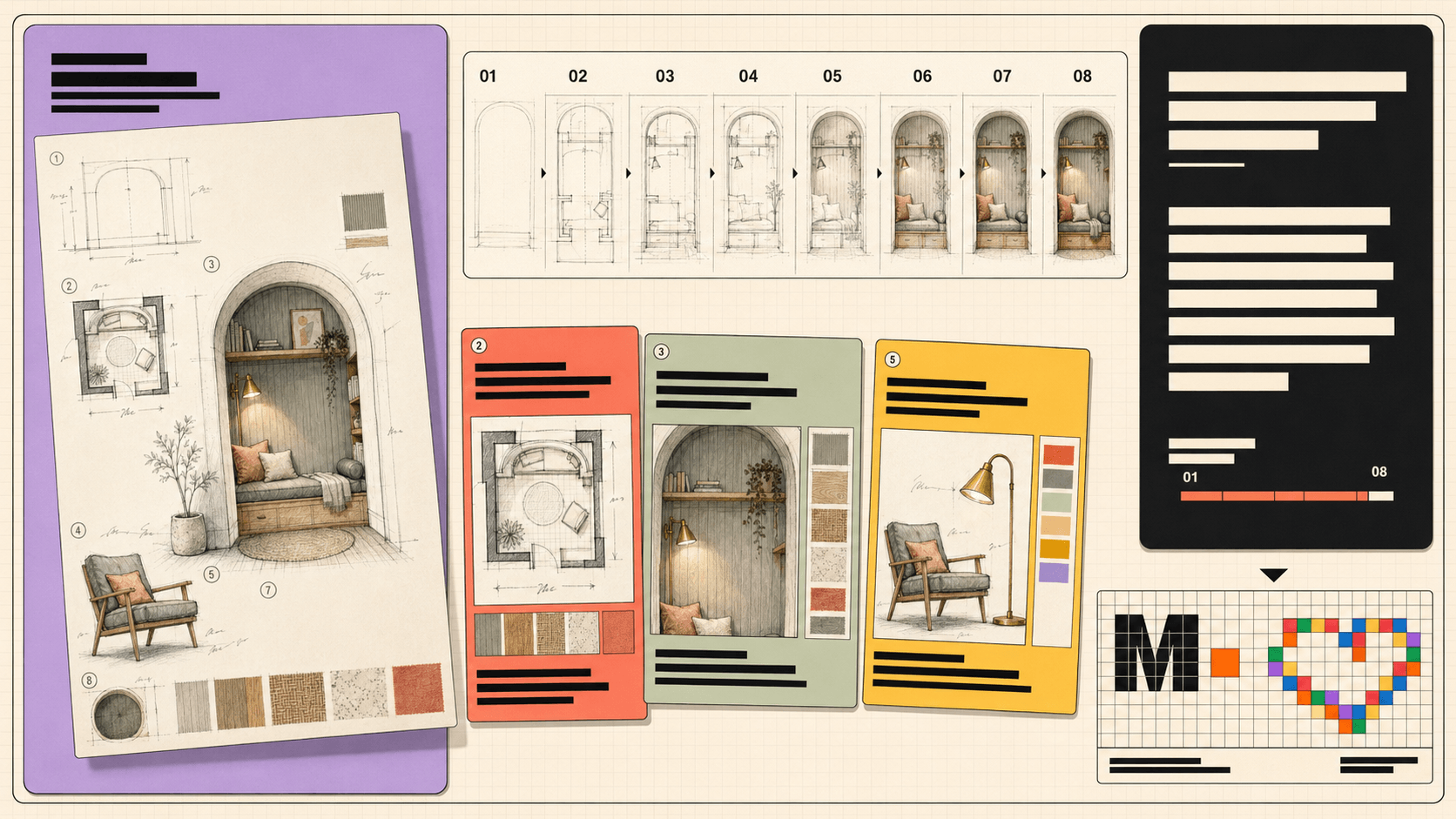
A further challenge was maintaining continuity across generated visual assets. Instead of reusing imagery as filler, each asset was assigned a specific purpose; the sketchbook sequence, for example, reveals selected regions from one master sheet across eight stages.
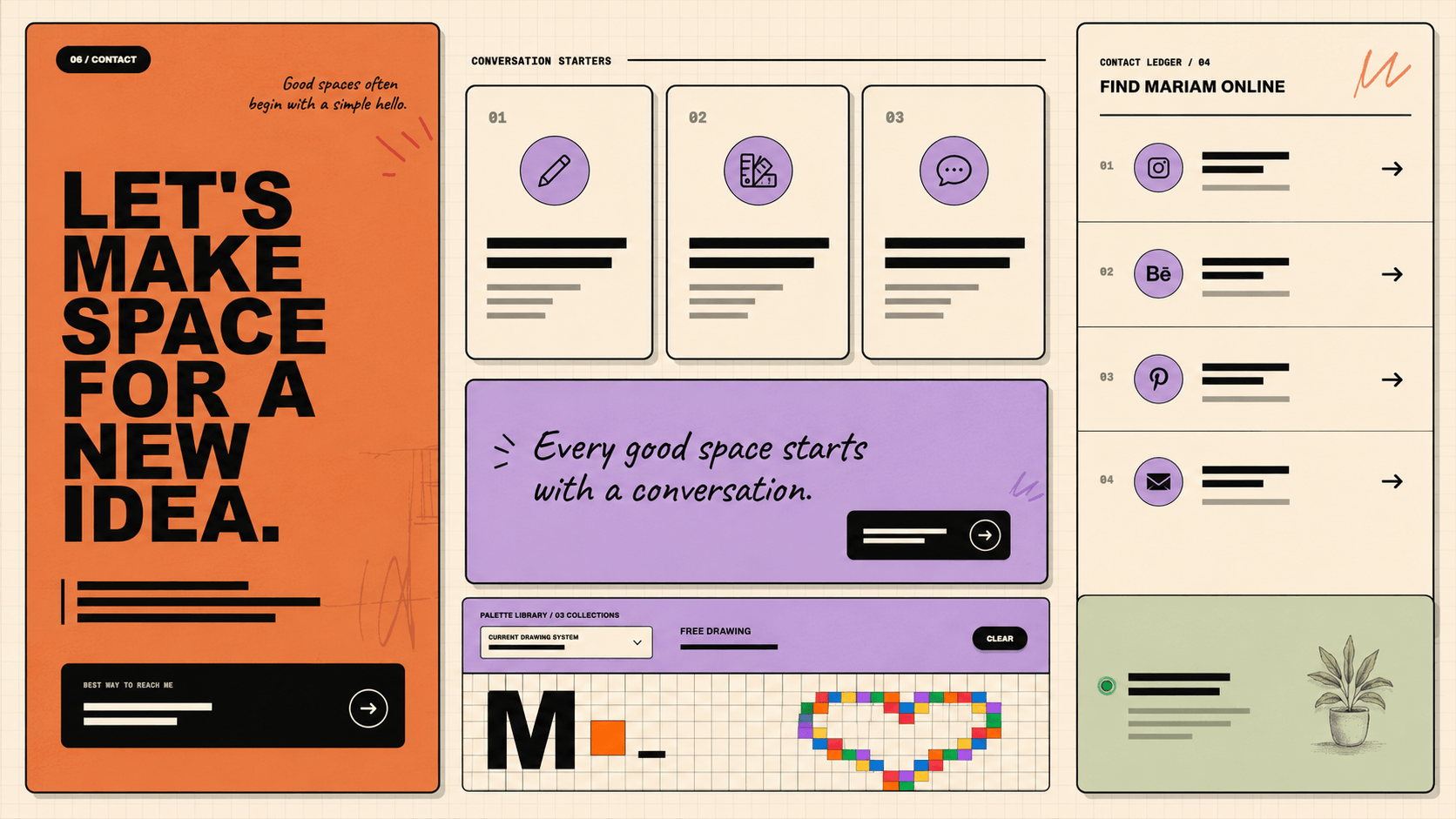
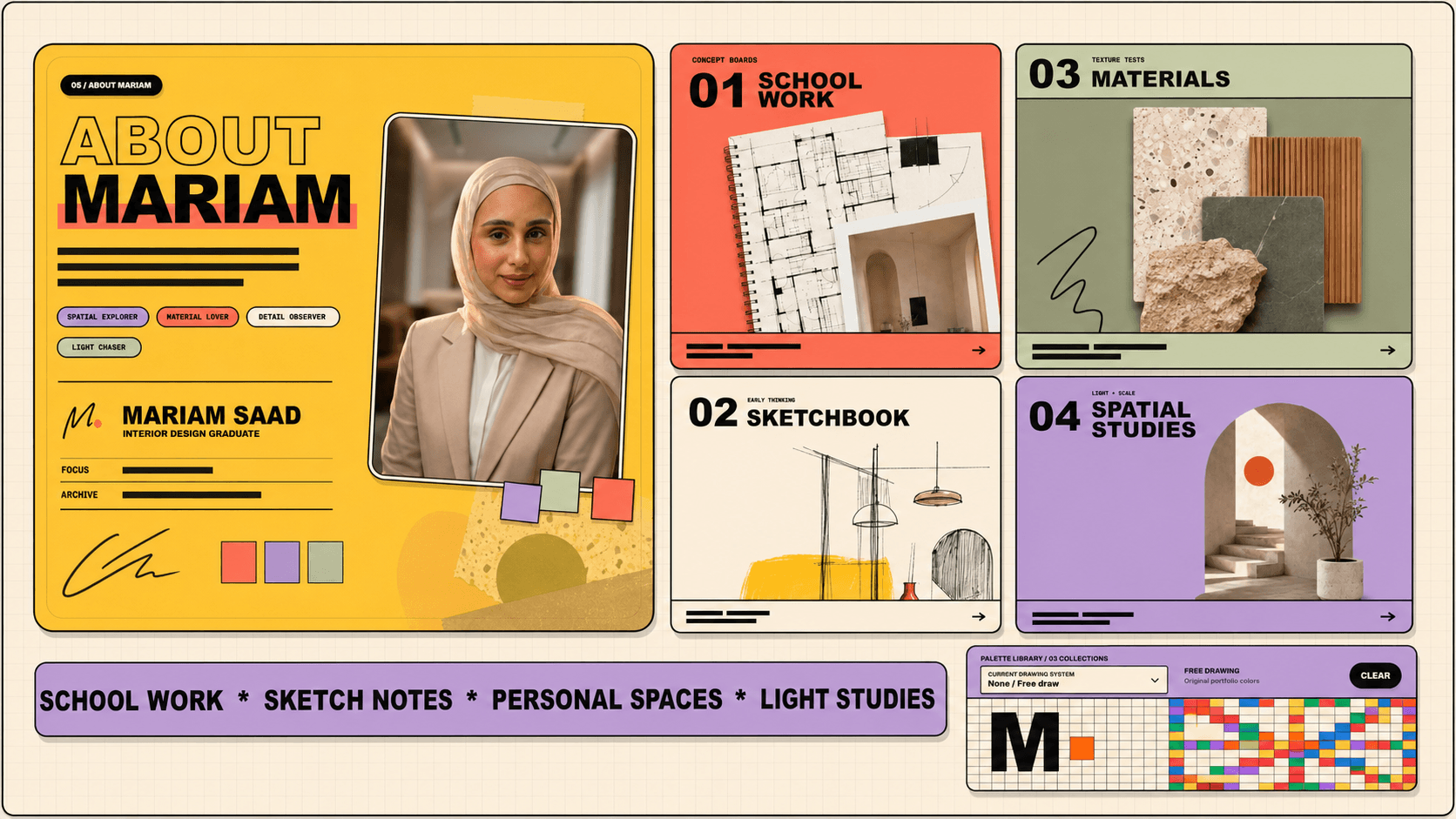
Editorial Portfolio System
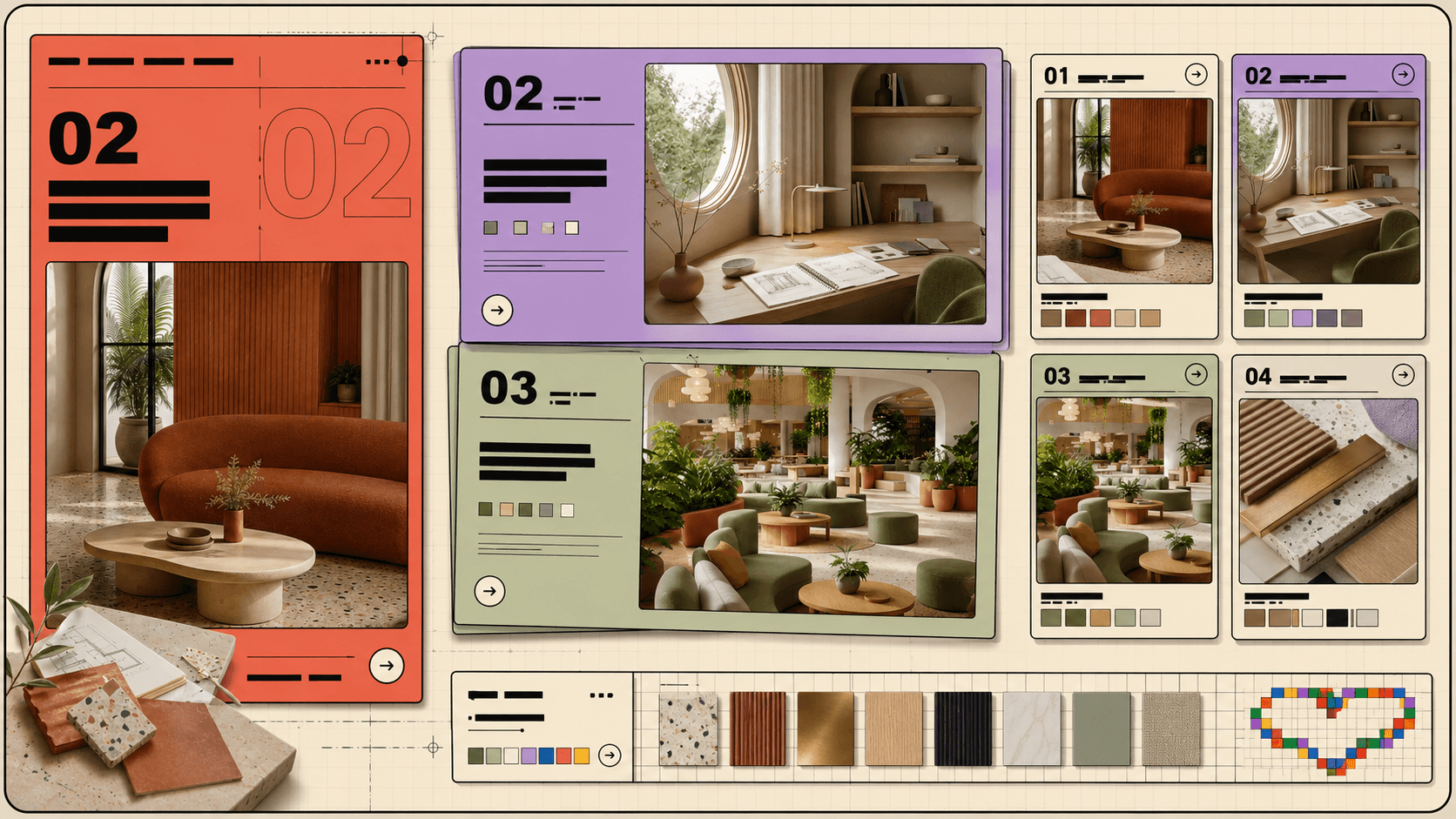
Full-screen compositions, project dossiers, archive views, biography, and contact experiences turn Mariam’s work into a paced editorial journey rather than a conventional template.
Seven distinct routes within one visual language
Page-Specific Motion Choreography
Each route has its own reveal logic and scroll behavior, while smooth scrolling and coordinated timelines keep the experience tactile, controlled, and consistent.
GSAP, ScrollTrigger, and Lenis working as one system
Custom Route Curtain
A bespoke full-screen curtain bridges navigation states, preserving visual continuity and giving every page change a deliberate sense of arrival.
Destination-aware transitions between portfolio chapters
More details (3)
Responsive Navigation Architecture
The desktop navigation rail and mobile menu are designed as related but purpose-specific interfaces, preserving hierarchy, clarity, and personality across screen sizes.
Dedicated behavior for desktop and handheld layouts
Progressive Sketchbook Sequence
The sketchbook uses a purpose-built generated master sheet and reveals precise regions through the scroll sequence, creating continuity instead of filling stages with unrelated imagery.
Eight scroll stages revealed from one master drawing sheet
Scroll-Led Project Narratives
Individual project pages guide visitors through concepts, materials, drawings, and outcomes with sticky studies and scroll-driven chapters designed for architectural storytelling.
Project chapters built around spatial process
The delivered frontend provides a cohesive seven-route portfolio experience covering Mariam’s selected work, project details, sketchbook, process, profile, and contact journey.
Desktop and mobile layouts have dedicated interaction behavior, image delivery is optimized through Next.js, and the current project routes are statically generated for reliable production output. The frontend is deployed as an interactive portfolio experience on Vercel.
The result is a complete frontend design system that presents interior design as a living process—from exploratory marks and material studies to resolved spatial narratives. CMS administration, persistent storage, authentication, and backend publishing are outside this project phase and remain planned separately.
- Core Routes
- 7 portfolio experiences
- Sketchbook Sequence
- 8 progressive scroll stages
- Responsive Coverage
- Dedicated desktop and mobile behavior
- Delivery State
- Frontend design and implementation complete
- Future Phase
- CMS dashboard and persistent content workflow